top of page

Working with Andrew Thurber under the ice has been 15 years in the making for me. While getting my painting MFA in 2008, a recently-discovered white, furry, deep sea crustacean called the yeti crab took hold as my muse. I prefer to paint from direct observation, so I first traveled to France to see the world’s only specimen. After a couple years of working from that holotype, I heard rumors that a new species of yeti crab had been discovered by a PhD student at Scripps, Andrew Thurber.


Above: one of my paintings of Andrew Thurber's Kiwa puravida yeti crab species, along with specimens of this yeti collected on the R/V Atlantis

I soon began pinging Andrew to visit his lab and sketch specimens of the novel species he discovered. Eventually, Andrew explained that his other research focus was worms in Antarctica. He showed me his photographs of scuba diving under the sea ice in McMurdo Sound, and I was immediately hooked.


Entering McMurdo sound in 2014 through a hole at the Turtle Rock dive site

I began a long process of learning to scuba dive so that I explore and paint this incredible world myself. In 2014, I was lucky enough to be selected as the NSF Antarctic Artists & Writers Awardee. At last, I had the life-changing experience of diving and painting under McMurdo Sound’s vast expanse of sea ice. It was even more exquisite than I imagined.


Cinder Cones Seep, 2018, 60x84 inches, Acrylic on canvas. While I had the chance to dive at the first methane seep Andrew discovered in McMurdo Sound, I am looking forward to seeing the newer seeps he is studying and gaining a deeper understanding of their relevance.

However, my work is not only about beauty, but also scientific discovery. While I had the chance to work with many incredible scientists during my 2014-15 Antarctic residency, Andrew did not end up deploying that field season. I am particularly interested in the chemosynthetic communities he studies. So for many subsequent years, we worked on proposals to collaborate together at McMurdo.


Finally together on the ice!  The B-249 team: Andrew, Lily, Dexter and Paola
Finally together on the ice! The B-249 team: Andrew, Lily, Dexter and Paola

Now, 15 years after beginning our collaboration, we finally have the chance to work together in the field. I am so looking forward to painting the incredible features that Andrew, Paola, and Dexter are investigating.


  • Writer: Andrew Thurber
    Andrew Thurber
  • Oct 25
  • 1 min read
ree

Every year the best training we do is our dive locker brief followed, often the next day, by a check out dive. This dive is to make sure that everyone is comfortable in their gear and ready to go off and science. As this is my 9th dive season down here, I was able to jump in the water first to shake off the cobwebs.

ree

I got to dive with my friends and colleagues Alex Brett, Steve Rupp, and Rob Robbins. Alex and Steve are the dive supervisors down here, and Rob is the dive safety officer who oversees the whole Antarctic Dive program.

ree

Somewhat entertainingly, this was also Rob’s check out dive - although he has dove here more than 2,500 times. Needless to say, none of us were surprised that he was pretty comfortable in the water and for me, it was like returning home. I love this place.

ree

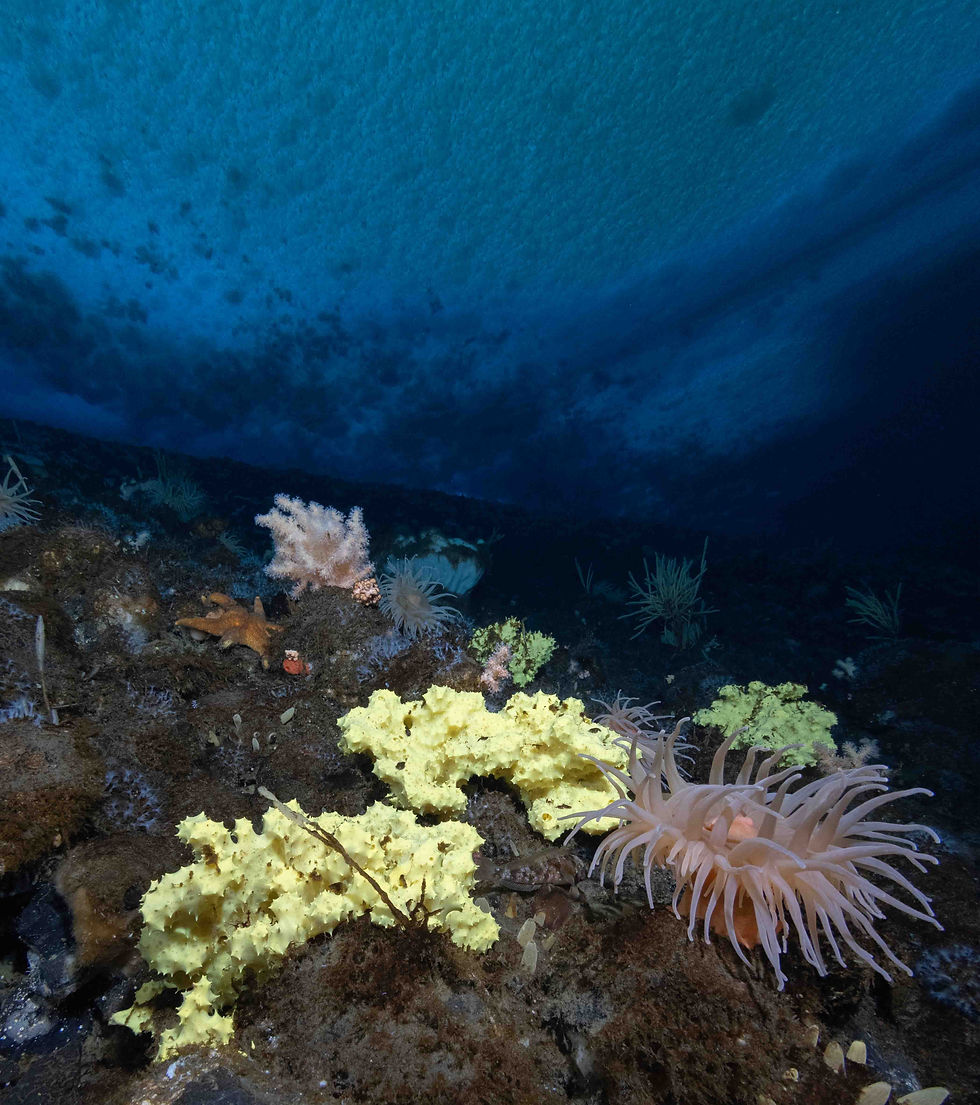
As a check out dive, we don’t bring any cameras along since the goal is to become either acquainted or re-aquanted with the cold water. But on a subsequent dive I was able to capture some images of the amazing underwater animals and landscapes.


  • paolabiologist
  • Oct 23
  • 1 min read

How does the Cold Dark Benthos team gets to McMurdo Station, Antarctica? Behold one of the few Ice Runways in the world: Phoenix Field!

Phoenix Runway in Ross Sea Ice Shelf, Antarctica

On the early hours of the day, we made our way to the U.S. Antarctic Program Passenger Terminal, ran by the U.S. Navy. The check-in for the flight is slightly different, where while there's no limit to the number of checked bags, we get a weight cap of 85 pounds per person. This includes from our cold weather clothing to our cameras and dive gear. We even wore our cold weather exposure gear on the flight to be ready for the -20F ahead of us!


Aboard a C-17 military plane, we had a smooth 5 hour ride ahead of us, including a sneak peak on the pilot cabin.


Once we arrived, words cannot describe our excitement of seeing the eerie white ice shelf in contrast with the Royal Society Range mountains for the first time. After two years of trainings and weather delays, we made it to Antarctica!

ree


Sunset-EarlySeason.jpg
bottom of page