top of page
  • Writer: Andrew Thurber
    Andrew Thurber
  • Nov 17
  • 1 min read
ree

We run a lot of transects along the seafloor. We do this to count the number of animals in a given area. Usually we count sea stars, urchins, anemones...things like that. Yesterday, and much to our surprise - we counted a seal. This seal was laying on the seafloor (within 1m width... our usual counting space). It was having a good time watch the science happen (or at least that is what I think it was doing).


ree

The seal even then decided to help by pointing out where the transect was. So it was a helpful seal in the end. In any case, this is a strange behavior and was very entertaining during the dive. I am looking forward to seeing the final data analysis from this site: "1,345 seastars... and 1 seal per 30 square meters."


  • Writer: Andrew Thurber
    Andrew Thurber
  • Nov 16
  • 1 min read
ree

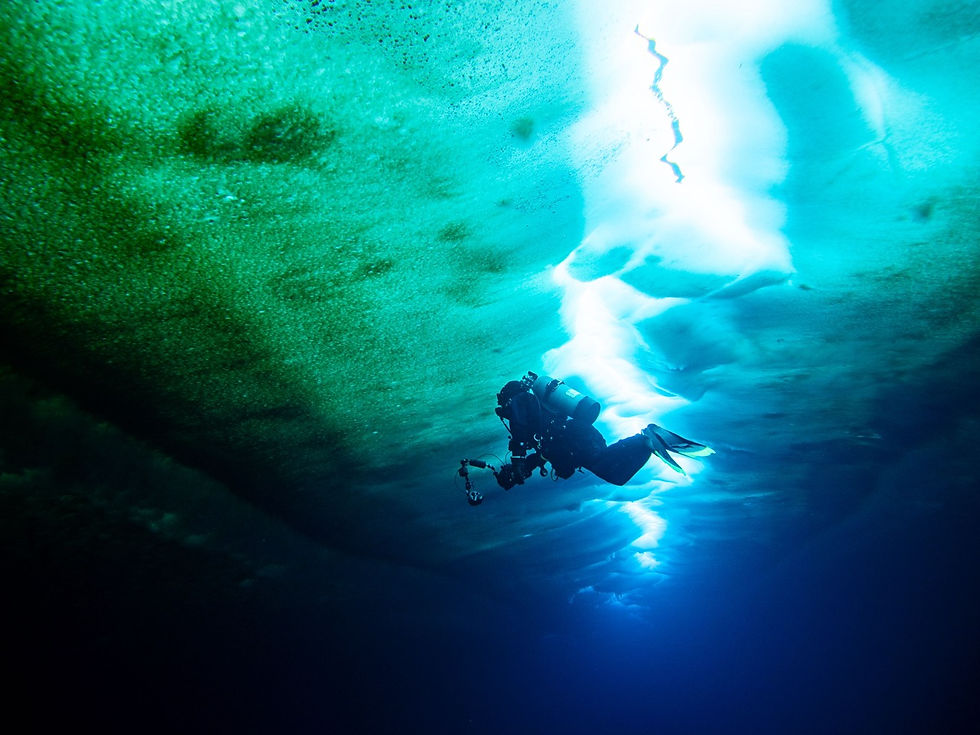
We work at a site that has an amazing crack over the top of it. Normally, it is a little farthur to the west, making it very difficult to reach out site - as the crack was up to 9m across when we first got here. Too big. Now it has largely filled in but remains a place where the seals breathe and teach baby seals to swim.

ree

Pretty much anywhere we work, the crack is in the background. Here you can see the dense anemone bed in the foreground and the crack in the back. It also lights the way so we don't need to use as many lights to see when we are underwater.


ree

The crack is also over a strange ripply shape section of microbial mat. This isn't how we normally see it, but again adds to both our understanding (and questions) about what is leading to the release of methane from the seafloor. Those little white dots are not sediment in the water or phytoplankton, but small pteropods that are incredibly abundant this year.


ree


  • davisdexter7
  • Nov 15
  • 1 min read
ree

While we are able to get off station quite often due to our diving, there are a few recreational opportunities around McMurdo such as this one - Observation Hill. At the top you can see most of Ross Island and views out across the ice shelf.


ree

This hike is 1.5 miles long, able to be done in an afternoon. Although, I chose Sunday (our day off from diving during the week). At 750 feet of elevation it's a steep climb, with a local challenge to hike it 39 times in a season to equal hiking Mt. Everest.


At the top you can see to the New Zealand Scott Base, pressure waves where the Ross Ice Shelf presses into Ross Island and all the way out to open water in the sound.


This cross remembers Scott's expedition team who perished on their journey back from the South Pole in 1912.


ree

It's a great place to reflect and get some alone time and I appreciate it for the vantage point. I like to draw en plein air when I travel to really take in the location and have a physical memory of what it looked like to me. This is after two sessions. I should be able to finish in one more!


Sunset-EarlySeason.jpg
bottom of page